**Turaki: Recent meeting of PDP, ADC moment of shared concern
**Court order won’t stand, Umeh boasts
**Ralph Nwosu insists congresses, convention to hold as planned
The embattled leadership of the African Democratic Congress (ADC) represented by former Senate President David Mark, has launched a high-stakes legal push to overturn the Independent National Electoral Commission (INEC) withdrawal of recognition of the party’s leadership.
For weeks, the party has been locked in an existential battle over its leadership structure after the INEC said it acted to implement a Court of Appeal order that effectively altered the party’s recognised leadership, triggering deep political tensions and a widening legal contest over the control of the platform.
To this end, Mark-led leadership of the ADC has approached the Federal High Court, Abuja, to reverse the decision by INEC that de-recognised it as the leadership of the party.
The electoral umpire, citing a ruling of the appellate court, had on April 1, officially removed the names of Mark (National Chairman) and Rauf Aregbesola (National Secretary) of the ADC from its official portal and website.
An aggrieved member of the APC, Nafiu Bala Gombe, laying claim to the leadership of the ADC, had sought an order of injunction restraining INEC from recognising the Mark-led leadership. But Justice Emeka Nwite, in a ruling, turned down the request and ordered that the applicant put the defendants on notice.
But in their response, the Mark-led leadership approached the appellate court to challenge the jurisdiction of Nwite to entertain a suit they claimed centred around their internal affairs, which according to them was not justiciable.
They also claimed that the court of Nwite had become functus officio, having held that the application for an order of injunction was denied.
But, the appellate court, in holding that the case of the appellant was premature, dismissed it and ordered accelerated hearing of the substantive suit at the trial court.
Specifically, the appellate court ordered the parties to maintain status quo ante bellum, a ruling upon which INEC decided to remove the names of the Mark-led leadership, which the commission had hitherto recognised as the leadership of the ADC.
Responding, the Mark-led leadership of the ADC approached the Federal High Court, seeking amongst others an order of mandatory injunction setting aside INEC’s refusal to attend or monitor the ADC congresses or convention, pending the hearing and determination of the instant suit.
They equally sought an order of mandatory injunction directing INEC to forthwith restore and maintain the names of all ADC National Working Committee (NWC) in its records and portal, prior to the institution of the suit, and pending the hearing and determination of the substantive suit.
The motion on notice, dated and filed on April 7 was filed by Mark’s new lawyer, Sulaiman Usman (SAN).
The motion was brought pursuant to Order 26, Rules 1, 2, 3 and 4 of the Federal High Court (Civil Procedure) Rules, 2019; and under the inherent jurisdiction of the court and equitable jurisdiction of the court to grant injunctive reliefs.
The reliefs sought included “an order of mandatory injunction, setting aside the decision, act, or directive of the respondent removing the names of the applicant’s National Working Committee from its official portal and the decision of refusal to attend or monitor the applicant’s congresses or convention pending the hearing and determination of the suit.”
The motion also sought another order of mandatory injunction, directing INEC to forthwith restore and maintain records of the names of Mark as National Chairman and Aregbesola as National Secretary, as well as all members of the National Executive Committee.
He sought an “order restraining INEC from tampering with, or otherwise interfering with the said leadership records of the 1st defendant, recognising or giving effect to any contrary or competing claims, pending the final determination of this suit.”
In the motion predicated on seven grounds, the applicant argued that the “status quo ante bellum” referred to the last lawful, uncontested state of affairs prior to the institution of the suit.
“As of September 2, 2025, when this action was instituted, the 2nd defendant (Senator David Mark) was the recognised National Chairman of the 1st defendant.
“The said leadership structure had already been constituted. The plaintiff had already resigned his prior office and had no subsisting role within the party,” Usman submitted.
He submitted further that INEC, acting under a misapprehension of the Court of Appeal order, removed the names of the said leadership from its portal, and adopted a position of non-recognition which created a vacuum in the leadership structure of the ADC.
Usman argued that INEC’s actions were inconsistent with the true meaning of the Court of Appeal order, capable of rendering the subject matter of the suit nugatory and prejudicial to Mark and Aregbesola.
“The law is settled that a mandatory injunction may be granted at an interlocutory stage to restore a party to the position wrongfully altered.
“This is a proper case for the exercise of the equitable jurisdiction of this honourable court,” the senior lawyer submitted.
Also, in another motion on notice dated April 2 but filed April 7 on Mark’s behalf, the lawyer sought an order granting accelerated hearing of the suit.
Usman, who prayed the court for an order abridging the time within which the parties were to file and exchange all processes in the suit, also sought an order directing that the suit be heard on a day-to-day basis until its final determination.
On why the case should be given accelerated hearing, the lawyer stated that the suit had raised fundamental issues affecting the leadership structure of the ADC, a registered political party.
He said the subject matter of the suit has far-reaching implications for democratic governance and political participation. According to him, the Court of Appeal has already directed that the matter be heard expeditiously.
He said the present uncertainty surrounding the leadership of ADC was affecting its internal administration, impeding its participation in political activities and creating avoidable institutional confusion.
Usman further stated that the continued pendency of the suit was capable of rendering the subject matter nugatory, encouraging parallel structures and conflicting claims.
The lawyer, who said the court has the power to accelerate proceedings in deserving cases, said it was in the interest of justice to determine the matter without delay.
Turaki: What PDP, ADC Leaders Discussed
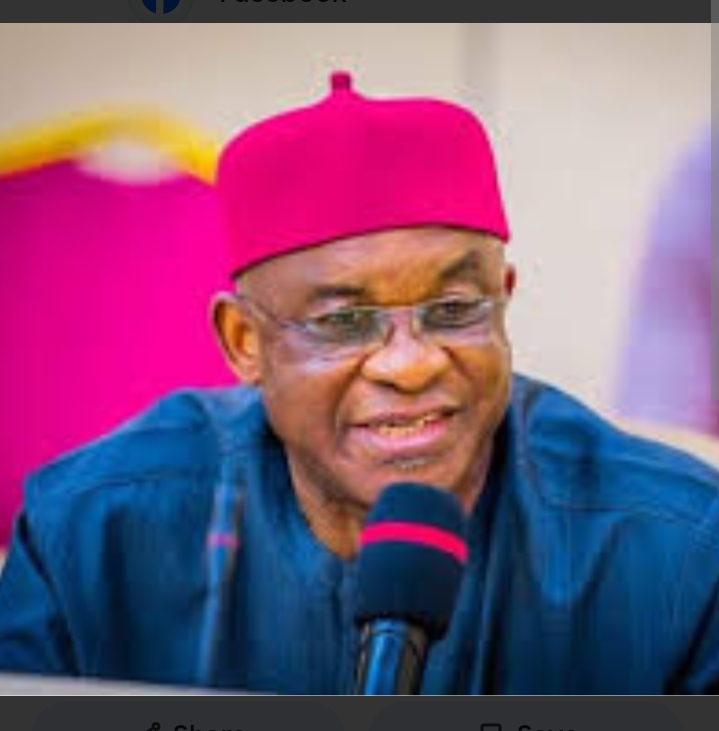
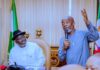
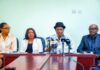
Embattled National Chairman of the Peoples Democratic Party (PDP), Tanimu Turaki, has explained why he led a delegation of party members on a solidarity visit to the David Mark-led ADC, hinting also at the thrust of their engagements.
Turaki described the meeting as “a moment of reflection, shared concern, and a reaffirmation of our collective duty to protect Nigeria’s democracy.”
In a statement on his page, he said the visit brought together key political figures, including former Vice-President Atiku Abubakar, Peter Obi, and other ADC leaders.
The discussions, he explained, focused on the challenges facing opposition parties in Nigeria.
Turaki added: “As we sat across from respected leaders such as Atiku Abubakar, Peter Obi, and other ADC leaders, there was a clear and sobering understanding: the challenges facing opposition parties in Nigeria today are real, shared, and demand unity of purpose.”
The PDP delegation included Oyo State Governor Seyi Makinde, Chairman of the party’s Board of Trustees, Adolphus Wabara, and founding party member and former Minister of Information, Jerry Gana, among others.
He noted that the talks were frank and concentrated on political pressures confronting opposition groups, which “are not isolated experiences; they are part of a broader pattern that threatens the very essence of political plurality in our country.”
Turaki emphasised that both parties shared a common resolve “to defend democratic principles and preserve space for dissenting voices in the country.”
He said the meeting highlighted the importance of maintaining a vibrant opposition as part of Nigeria’s democratic process.
“This visit was a reminder that beyond politics, there is a higher responsibility—to Nigeria, to its people, and to the future we all hope to build,” he said.
Umeh: Amupitan Deliberately Sabotaging ADC
The Senator representing Anambra Central Senatorial Zone, Victor Umeh, has accused the chairman of INEC, Prof Joash Amupitan of deliberately sabotaging the ADC.
Umeh stated this yesterday in Awka after a preparatory meeting for the party’s congress in the state.
He said it was surprising that the chairman of an electoral body, who was not just a lawyer, but a Senior Advocate of Nigeria and a law professor claimed not to know that internal party matters were not justiciable.
“Well, the controversy over the party (ADC) leadership is very simple and straightforward. We are talking about the court making an order in the leadership of African Democratic Congress, and people are busy discussing the order made by the court, which INEC, headed by a professor of law and a senior advocate of Nigeria, feigned ignorance that no court in Nigeria has jurisdiction to entertain any matter bordering on internal affairs of a political party or leadership of a political party.
“The Supreme Court has delivered judgment a number of times in the past on this, the oldest was in 1983. The Supreme Court said that courts do not answer political questions. Issues concerning internal affairs of political parties are not justiciable. Issues concerning leadership of a political party are not justiciable. In other words, you can’t bring to court such issues since 1983.
“Then last year, for example, the Supreme Court in the case in the appeal brought by Senator Nenadi Usman against Julius Abure and the Labour Party, emphasized again that court has no jurisdiction to determine the leadership of a political party, or to get into any disputes involving internal affairs of a party or leadership of a political party. That was delivered on the 4th of April, 2025.
“Then this year, we, the National Assembly amended the Electoral Act, and in Section 83, subsection 5 of the Electoral Act 2026, as amended, the provision says that no court in Nigeria shall entertain jurisdiction to hear any matter or suit concerning internal affairs of a political party. Is there any ambiguity in this?
“So whether the Federal High Court of Justice Nwite made any order or raised any issue, it cannot stand. And the Court of Appeal that made the damning order that INEC wants to rely on, to say now, ‘oh, the order is that we should return to status quo and nobody should do anything’, that will render the trial court proceedings nugatory.
“The same court of appeal has no jurisdiction, because the matter in dispute is who are the leaders of ADC. Is it David Mark and Rauf Aregbshola, or Nafiu Bala Gombe?
“So the Federal High Court has no jurisdiction, the Court of Appeal has no jurisdiction, even the Supreme Court has no jurisdiction by this explanation. So they now made that order and INEC lapped on it to begin to say that there are issues in.
“That is murder. What they committed is murder and is unacceptable. They cannot do that. Nigeria is a country that is governed by laws, and the instances I have given you now show you clearly that the two courts have no reason to meddle into this matter, and INEC that is acting on it is mischievous.
“INEC is headed by a professor of law and a senior advocate of Nigeria. He knows that the two courts have no jurisdiction to entertain the matter. So why is he acting on it? And in acting on it, he acted on it wrongly,” Umeh queried.