Oloyede Calls for Structural Reforms, Improved Welfare to Revive Nigerian Club Football

“These are some of the measures our clubs need to embrace if they want to compete effectively and achieve success in continental competitions,” he added.
Hon. Tete Has Performed Marvelously Well in Leading Egbokodo Community — Amaju

**Spokesman says community has fully complied with Olu of Warri’s directive
By: Celestine Ukah
The Spokesman of Egbokodo Community in Warri South Local Government Area of Delta State, Mr. Otuedon Okome Amaju, has commended the Chairman of the Egbokodo Community Trust, Hon. Austin Tete, for what he described as his remarkable leadership and contributions to the development and growth of the community.
Amaju gave the commendation on Saturday, October 24, shortly after a meeting held at Otsoron Hall in Egbokodo Community. He praised Tete for his leadership qualities, understanding, and peaceful approach to handling community affairs, as well as his respect and love for the people.
The community spokesman expressed surprise at Tete’s willingness to comply with the resolutions from the palace, noting that he had not anticipated such a peaceful disposition. He described the Trust Chairman as a peaceful and mature and responsible personality and a proud ambassador of Egbokodo Community.
According to Amaju, the Olu of Warri, His Majesty Ogiame Atuwatse III, CFR, had earlier directed Tete and community stakeholders representing the four quarters of Egbokodo namely: Boji, Omatsoma, Otuemu, and Tobile to work together to prepare a new constitution for the community and ensure its acceptance.
He said the peaceful atmosphere at the meeting and the manner in which proceedings were handled had contradicted the expectations of those who anticipated a different outcome.
Amaju further disclosed that a new leadership is expected to emerge in December 2026, in line with the ongoing arrangements for the community’s administration.
He explained that the positions of Trust Chairman and Treasurer would be appointed by the Elders Council, while the remaining positions would be zoned among the four quarters—Boji, Omatsoma, Otuemu, and Tobile. Each quarter is expected to nominate and present its candidates to the community.
The spokesman also disclosed that Tete is expected to hand over by the end of November 2026.
In appreciation, Tete reportedly thanked the community for giving him the opportunity to serve over the years, expressing gratitude for the trust and support extended to him during his tenure.
Governor Oborevwori: The Lightning Rod Of Delta 2027 When One Man’s Performance Becomes Everybody’s Political Electricity!

Governor Oborevwori: The Lightning Rod Of Delta 2027 When One Man’s Performance Becomes Everybody’s Political Electricity!
By: Dr Festus Goziem Okubor
There comes a time in the political history of a state when one man ceases to be merely a candidate and becomes the political currency by which other candidates are valued. When his name becomes an endorsement, his presence an advantage, and his absence a frightening political liability.
That moment has arrived in Delta State. And that man is Rt. Hon. Sheriff Francis Oborevwori, Governor of Delta State!
Let us shock a few sensibilities with a proposition that may offend political egos but deserves serious consideration: In Delta 2027, Governor Oborevwori may not merely be campaigning for re-election. He may become the principal political electricity powering virtually every other electoral contest in the state!
From the presidential campaign to the Senate, House of Representatives and State House of Assembly elections, the Governor’s political influence promises to be the lightning rod that attracts attention, mobilises support and ignites electoral possibilities.
And here is the uncomfortable truth: The political torch he lights may glow towards victory, while the one he declines to light may struggle desperately against electoral darkness!
This is no ordinary political compliment. It is an emerging reality that ambitious politicians would be unwise to dismiss.
For nearly three and a half years, Oborevwori has pursued governance with a combination of political humility, administrative steadiness and visible infrastructural ambition. From the ambitious flyover projects in Warri and Effurun to road construction, urban renewal and interventions across the state, his administration has provided tangible projects around which a formidable political narrative can be constructed.
While some politicians manufacture popularity through billboards, others acquire it through performance. One rents applause; the other earns recognition.
Oborevwori’s greatest political asset may therefore be neither his office nor his party machinery, but the growing perception that his government has delivered results.
And performance, when sufficiently visible, becomes a powerful electoral argument.
Consider the implications.
A senatorial candidate standing beside a popular Governor does not merely receive an endorsement; he potentially inherits a reservoir of goodwill. A House of Representatives candidate campaigning on the Governor’s achievements acquires a ready-made conversation with the electorate. A House of Assembly hopeful identified with a successful administration enjoys an advantage that political posters and expensive jingles cannot automatically purchase.
Even the presidential campaign in Delta State may discover that the Governor’s local credibility offers a more persuasive bridge to voters than distant national political rhetoric.
In other words, Oborevwori may become the candidate whose political capital other candidates must borrow to improve their electoral fortunes!
Of course, elections are not coronations. The people retain their sovereign right to choose, and no Governor possesses the magical power to manufacture victory for an undeserving candidate. But political influence is real, incumbency matters, organisational strength counts, and demonstrated performance can substantially alter electoral calculations.
That is precisely why the emerging Oborevwori factor deserves attention.
The political equation of 2027 may no longer be simply about which party presents the most attractive candidate. It may increasingly become a question of who can credibly connect with the Governor’s achievements, political network and reservoir of public goodwill.
Some political aspirants may find this proposition offensive. They will insist that they possess independent popularity, formidable structures and personal electoral value.
Excellent! But there is a difference between owning a lantern and having electricity to power an entire city!
The Governor need not personally determine every political outcome for his influence to become decisive in many of them. Indeed, his greatest strength may lie in the capacity to make an already credible candidate considerably more electable.
The ultimate irony of Delta 2027 may be that politicians seeking different offices will discover that they are all, in varying degrees, campaigning on the performance of one Governor!
That is how political leadership evolves into electoral influence. That is how governance becomes political capital. And that is how one man’s record can reshape the fortunes of an entire political generation.
So, let the aspirants assemble. Let the campaign offices open. Let the billboards rise and the slogans multiply.
But let nobody mistake the political weather, Sheriff Oborevwori may be contesting only one office in 2027, but his performance could become the most consequential issue in nearly every electoral contest across Delta State.
He is not the owner of the people’s votes. Nobody is.
But he may well become the most influential custodian of the political goodwill that helps determine where those votes go.
And when the electoral lights come on in 2027, many candidates may discover that the most important question was never how brightly their own bulbs could shine, but whether they had connected themselves to the Oborevwori political grid!
The political electricity is gathering.
The lightning rod is standing.
DELTA 2027: LET THERE BE LIGHT!
Delta State Government Approves N4bn Empowerment For 15,000 Indigent Residents across 25 LGAs
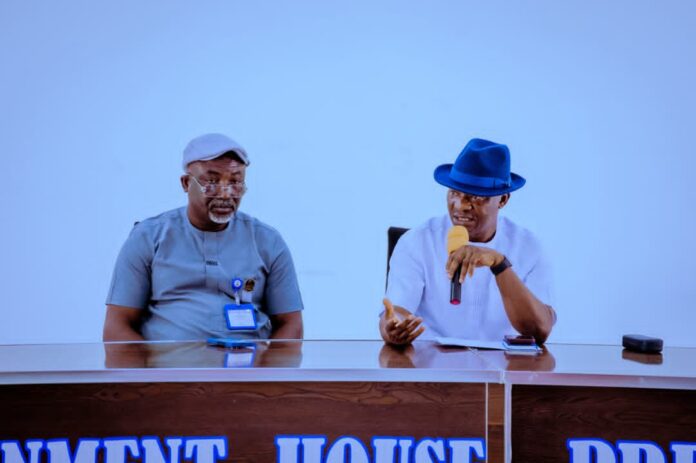
Delta State Government Approves N4bn Empowerment For 15,000 Indigent Residents across 25 LGAs
The Delta State Government has approved N4 billion to empower 15,000 indigent residents to support small businesses, encourage entrepreneurship and ease economic hardship across the state.
The beneficiaries will be drawn from the 25 local government areas under an initiative designed to improve livelihoods and strengthen the purchasing power of vulnerable residents.
Commissioner for Works (Rural Roads) and Public Information, Mr Charles Aniagwu, disclosed this while briefing journalists at the end of the State Executive Council meeting presided over by Governor Sheriff Oborevwori at Government House, Asaba. He was accompanied by the Chief Press Secretary to the Governor, Sir Festus Ahon.
Aniagwu said the intervention would be implemented through the Delta State Social Investment Programme in the coming weeks, adding that the governor had directed that the selection process be guided by clear eligibility criteria.
According to him, priority will be given to indigent persons who already operate small businesses, those seeking to establish micro-enterprises and vulnerable residents who require financial support to improve their circumstances.
He said the grant was intended to help existing businesses overcome economic challenges, provide start-up capital for aspiring entrepreneurs and enable beneficiaries to meet pressing needs.
The commissioner explained that the initiative was part of the government’s efforts to ensure that the benefits of ongoing economic reforms translated into tangible improvements in the lives of ordinary Deltans.
Beyond the empowerment programme, the Executive Council approved compensation for land acquired in the central senatorial district for agricultural purpose.
Aniagwu said the decision followed discussions at the last economic summits, where the need to make land available for large-scale farming and agricultural investment was identified as a priority.
He said the government was taking deliberate steps to create an environment that would attract commercial farmers from within and outside Nigeria while giving local farmers opportunities to expand their operations.
The move, he added, was expected to make the state’s agricultural land bank more accessible and valuable to investors, with the potential to stimulate production, create jobs and expand economic opportunities.
In preparation for the 2027 fiscal year, the council also approved the Economic and Fiscal Updates, Fiscal Strategy Paper and Budget Policy Paper to guide the preparation of the state’s next budget.
Aniagwu said the documents would provide the economic assumptions, revenue projections and policy direction required for realistic budget planning.
He noted that anticipated stability in the naira would help government planning, although possible fluctuations in international crude oil prices could affect revenue expectations from the Federation Account.
The council also directed the Ministry of Health to explore the expansion of free medical outreach services in riverine communities.
The initiative followed a recent medical outreach in communities affected by oil spillage, which was organised after the governor visited the affected areas and directed the state to provide medical assistance.
According to Aniagwu, the response to the exercise was encouraging, with residents travelling from other areas to access the services after hearing about the programme.
He said the governor had therefore asked the ministry to consider making such outreach programmes more regular to improve access to healthcare in riverine communities.
In another decision aimed at improving workers’ welfare, the council approved the construction of a clubhouse for civil servants at the State Secretariat in Asaba.
Aniagwu clarified that the facility was intended to provide civil servants with a place to meet, socialise and relax outside working hours.
The approvals, he said, reflected the administration’s continued focus on social investment, agriculture, public service welfare and human development alongside its infrastructure programme.
2027: Delta Inaugurates APC Campaign Council, Unveils MORE Plus
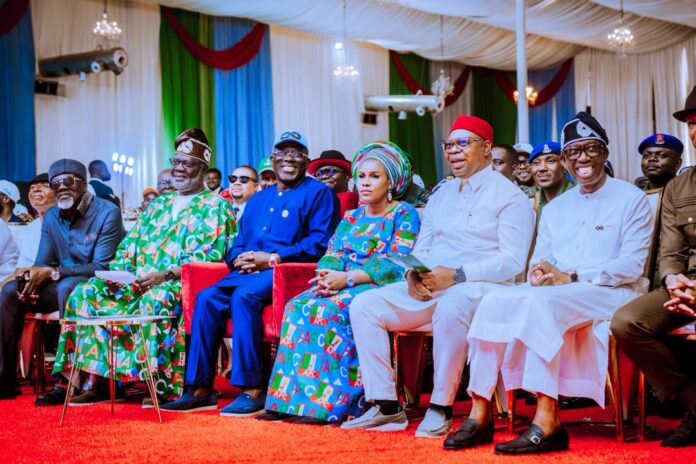
**As Oborevwori charges APC Faithful on Grassroots Mobilisation for Tinubu, others
Delta State Governor, Rt. Hon. Sheriff Oborevwori, has charged members of the All Progressives Congress (APC) Campaign Council to take the party’s message to the grassroots and mobilise voters across units, and wards ahead of the 2027 general elections.
Oborevwori gave the charge on Thursday in Asaba during the inauguration of the Delta State APC Campaign Council, where he unveiled “MORE Plus” as the theme of his re-election campaign.
He described membership of the council as a call to service, urging members to work with unity, discipline and dedication to secure victory for President Bola Tinubu, himself and other APC candidates.
The governor said the party must go beyond rallies and political meetings to engage ordinary citizens, including market women, youths, workers, farmers and traders, through door-to-door campaigns and direct interaction with voters.
He urged campaign coordinators at the local government and ward levels to strengthen their structures, work with support groups and ensure that the party’s message reached every polling unit.
Oborevwori said the APC should campaign on its record in government, pointing to the Federal Government’s policies and his administration’s M.O.R.E Agenda, which focuses on infrastructure, education, healthcare, workers’ welfare, youth empowerment and security.
“Our achievements must speak for us, but we must also be prepared to explain them convincingly,” he said, urging party members to communicate the impact of government policies to the electorate.
He assured Deltans that political activities would not distract his administration from delivering on its promises, adding that ongoing projects and development programmes would continue during the campaign period.
The governor also appealed to politicians and their supporters to preserve peace, avoid hate speech and ensure that political differences did not divide the state.
Deputy Governor, Sir Monday Onyeme, in his remarks, commended Oborevwori for aligning Delta State with the Federal Government, urging APC members to consolidate the gains by working towards victory in 2027.
Onyeme called on party faithful to publicise Tinubu’s achievements in areas such as local government autonomy, education funding, grassroots development, security, electricity and road infrastructure.
Minister of Aviation and Aerospace Development, Festus Keyamo, defended Tinubu’s economic reforms, arguing that difficult decisions were necessary to address the country’s economic challenges.
Keyamo said the reforms had caused temporary hardship but maintained that they were intended to address underlying problems, including the unsustainable cost of fuel subsidies.
In his welcome address, Delta APC Chairman, Chief Solomon Arenyeka, said the inauguration demonstrated the party’s readiness to contest and win elections at all levels in 2027.
Arenyeka urged members of the council to work together, mobilise voters peacefully and translate the achievements of the APC-led governments into electoral support.
Former Governor of the State, Senator Ifeanyi Okowa, who spoke on behalf of Delta North Senatorial District, said expectations were high following their state’s mass defection from PDP to the APC in April 2025.
Okowa urged the campaign council to demonstrate the party’s strength through an impressive electoral performance, stressing the need to reach voters directly rather than rely solely on rallies.
Speaking for Delta Central Senatorial District, Olorogun O’tega Emerhor expressed delight that the APC was now the ruling party in Delta State, pledging support for the re-election of Tinubu and Oborevwori.
Former Secretary to the State Government, Comrade Ovuozourie Macaulay, who spoke for Delta South Senatorial District, said the Oborevwori administration’s achievements would help the party’s campaign, assuring that the district would work towards delivering substantial votes for the APC.
Former APC National Woman Leader and Executive Director of the Nigerian Export-Import Bank, Stella Okotete, urged women to intensify mobilisation, setting a target of at least 75 per cent of the votes for Tinubu and other APC candidates.
Responding, Director-General of the campaign council, Senator James Manager, pledged to work with party leaders and members to secure victory for the APC, describing the assignment as an onerous task requiring collective effort and sustained grassroots mobilisation.
The campaign council is made up of Governor Oborevwori as chairman, Senator Manager as Director-General, Mr Chiedu Ebie, as Deputy Director-General and a host of others.
7th DOPF Lecture: Oborevwori, Okubor, Dafinone, Others Charge Stakeholders On Credible Elections

7th DOPF Lecture: Oborevwori, Okubor, Dafinone, Others Charge Stakeholders On Credible Elections
The Governor of Delta State, Rt. Hon. Sheriff Francis Oborevwori, his Chief Strategist, Dr Festus Goziem Okubor, Senator Ede Dafinone and other stakeholders have called for credible elections, responsible journalism and stronger institutional accountability as Nigeria prepares for the 2027 general elections.
The call was made at the Delta Online Publishers Forum (DOPF) 2026 Annual Conference and 7th Annual Lecture Series, held on Wednesday, October 21, at David’s Event Centre, GRA, Asaba, Delta State, under the theme, “Democracy Under Pressure: Electoral Integrity, Security Challenges and Media Accountability in Nigeria.”
In his message Governor Oborevwori, represented by Dr. ifeanyi Osuoza, Hon Commissioner for Special Duties (Govt House) urged journalists and online publishers to uphold accuracy, fairness, balance and professional integrity, warning that misinformation and hate speech could erode public trust and threaten democratic stability. He emphasised the importance of credible elections, accountable institutions and responsible communication in strengthening democracy.
On his part, the Chairman of the occasion and Chief Strategist to the Governor, Dr Festus Goziem Okubor, followed with an address titled “Democracy Under Pressure: When the Ballot, the Bullet and the Phone Compete for Power!”
Okubor argued that electoral technologies, including the Bimodal Voter Accreditation System (BVAS) and INEC Result Viewing Portal (IReV), could not, on their own, guarantee credible elections without transparency, integrity and public confidence in the electoral process.
He identified insecurity and its impact on voter participation as major concerns, while warning about the growing influence of social media and artificial intelligence-generated content in shaping political narratives. He called for rigorous verification, responsible digital communication and professional media standards, alongside greater commitment by political actors to democratic principles.
Guest lecturer, Professor Dode Robert Oghenedoro, Professor of Political Science at Dennis Osadebay University and former Deputy Vice-Chancellor (Academics), examined the relationship between electoral integrity, security and media accountability.
He emphasised the need for independent electoral institutions, impartial security operations and a professional media capable of holding public officials accountable. He also underscored the importance of protecting journalists and ensuring citizens could participate in elections without intimidation.
DOPF Chairman, Emmanuel Enebeli, reaffirmed the forum’s commitment to ethical and accountable digital journalism, urging publishers to verify information before publication, preserve editorial independence and take responsibility for the content they disseminate.
He stressed that the credibility of online media depended on accuracy, fairness and public trust, particularly during politically sensitive periods when unverified reports could inflame tensions and mislead citizens.
In their goodwill messages, Senator Ede Dafinone, the Delta State Commissioner of Police, CP Samuel Etaifo Erale, the Delta State Resident Electoral Commissioner, Sir Etekamba Udo Umoren, and the Delta State Government’s Executive Assistant on Public Enlightenment, Olisa Ifeajika, reinforced the need for peaceful elections, institutional cooperation and responsible communication.
Dafinone, who represents Delta Central Senatorial District, described the media as a vital pillar of democracy and urged journalists to promote accountability, counter misinformation and uphold truth and fairness. He commended DOPF for providing a platform for discussions on governance and democratic development.
The Commissioner of Police, represented by SP Aliyu Mairiga, reaffirmed the command’s commitment to protecting voters and securing elections. He said the police were strengthening intelligence-led, technology-driven and community-centred policing to tackle kidnapping, cultism, farmer-herder conflicts and cybercrime.
He called for cooperation among security agencies, political actors, the media and citizens, while urging political stakeholders to avoid violence and online publishers to verify information and shun sensational reporting capable of breaching public peace.
Umoren, represented by INEC’s Director/Administrative Secretary in Delta State, Mr Davis Eldred, reaffirmed the commission’s commitment to conducting elections in accordance with the Constitution and Electoral Act. He described electoral security as a shared responsibility and highlighted the importance of transparency, voter education, inclusivity and public confidence.
Ifeajika urged political actors to prioritise national interest and peace, warning that misinformation and manipulation of public opinion could threaten national security and democratic stability. He also challenged journalists to deepen their knowledge of the Constitution and Electoral Act to improve public understanding of electoral processes and citizens’ rights.
The panel session, Moderated by Professor Kemi Emina, featured Dr Patrick Edema, who examined media accountability; Dr Norbert Chiazor, who addressed credible elections, voter apathy, insecurity and the media’s responsibilities; CSP Gladys Enoho Imegu, who highlighted police professionalism and stakeholder cooperation; and legal practitioner Godswill Umahi Esq, advocated electoral reforms, stronger institutional independence, campaign-finance regulation and digital literacy.
The conference brought together stakeholders from the political, security, media and public sectors, including representatives of the Delta State Police Command, INEC and the Delta State Government.
The speakers and discussants agreed that credible elections could not be secured by technology or security agencies alone. They called for collective commitment by political parties, candidates, public institutions, journalists and citizens to uphold the law, reject violence, counter misinformation and protect the integrity of the electoral process ahead of the 2027 general elections.
Delta Online Publishers Forum Chairman Enebeli, Tasks Online Publishers on Accuracy, Accountability
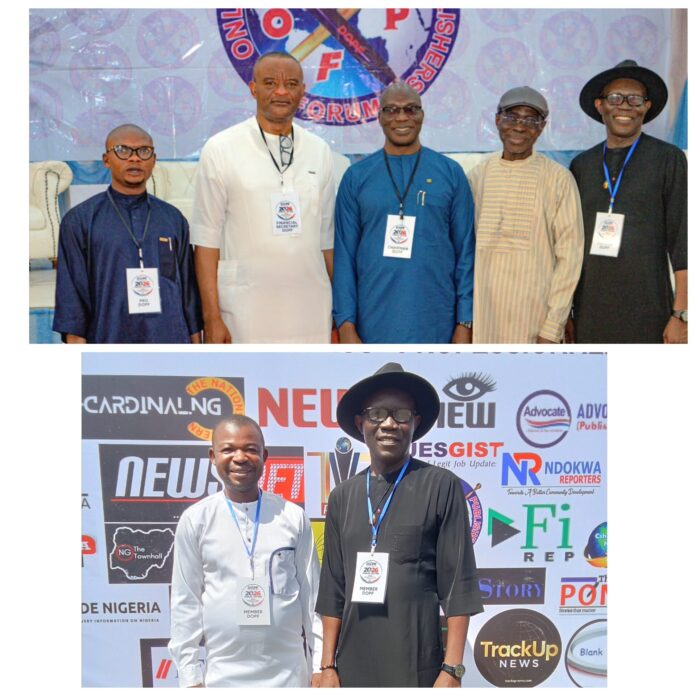
Delta Online Publishers Forum Chairman Enebeli, Tasks Online Publishers on Accuracy, Accountability
The Chairman of the Delta Online Publishers Forum (DOPF), Mr Emmanuel Enebeli, has charged online publishers and other media professionals to uphold accuracy, fairness, verification and editorial independence in their coverage of Nigeria’s democratic process, particularly as the country approaches the 2027 general elections.
Enebeli gave the charge during the 2026 DOPF Annual Lecture Series in Asaba, Delta State, where he emphasised the critical role of responsible journalism in promoting credible elections, protecting public confidence and strengthening democratic governance.
Speaking on the theme, “Democracy, Electoral Integrity, Security Challenges and Media Accountability in Nigeria,” the DOPF chairman said the issues addressed by the lecture were fundamental to the health of Nigeria’s democracy, the credibility of its elections and the safety of citizens.
He noted that the media had a significant responsibility to ensure that public understanding of electoral processes was not distorted by misinformation, unverified reports or publications capable of undermining confidence in democratic institutions.
According to him, online publishers must report without fear or favour, resist sensationalism and hold public institutions accountable in the interest of society.
“As online publishers, we have a responsibility to uphold accuracy, fairness, verification and editorial independence,” Enebeli said, stressing that the credibility of the media depended largely on its commitment to responsible journalism.
He warned that irresponsible reporting could undermine public trust and weaken the media’s ability to perform its watchdog role effectively, adding that journalists and publishers must be willing to hold themselves accountable while demanding transparency from public officials and institutions.
The DOPF chairman also called for constructive engagement among the media, electoral authorities, security agencies, political parties, civil society organisations and citizens, describing such cooperation as essential to sustaining a healthy democracy.
He said the annual lecture provided an important platform for stakeholders to examine the challenges confronting Nigeria’s electoral system and develop practical solutions to improve democratic governance.
Enebeli expressed optimism that discussions at the event would produce actionable recommendations capable of informing public policy, strengthening democratic institutions and improving accountability ahead of the 2027 general elections.
He further acknowledged the contributions of the chairman of the occasion, the guest speaker, the discussant, partners, members of the organising committee and other stakeholders whose support contributed to the success of the programme.
On behalf of the executive council and members of the Delta Online Publishers Forum, Enebeli welcomed participants to the lecture series and expressed the hope that the deliberations would yield meaningful outcomes for Nigeria’s democracy.
He urged all stakeholders to recognise their individual and collective responsibilities in safeguarding the integrity of the nation’s democratic process.
Aniagwu urges online publishers to prioritise credibility, profitability over traffic
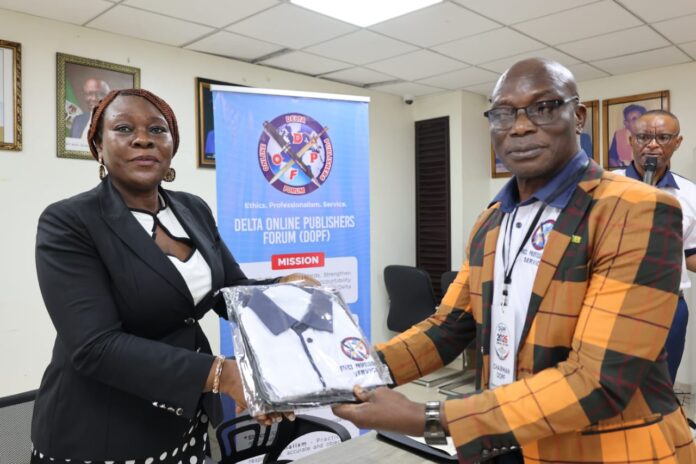
Aniagwu urges online publishers to prioritise credibility, profitability over traffic
By Marian Kogolo