Delta Govt reaffirms Commitment to Rural Healthcare, Deploys Doctors to Hard-to-Reach Communities
The Delta State Government has reaffirmed its commitment to improving healthcare delivery in rural communities, with plans to strengthen the availability of doctors and other medical personnel in underserved areas across the state.
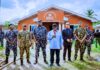
The State Commissioner for Health, Dr Joseph Onojaeme, gave the assurance on Monday during an unscheduled visit to the Uwheru Primary Healthcare Centre in Ughelli North Local Government Area.
Onojaeme, who had earlier paid a courtesy visit to the traditional ruler of Uwheru Kingdom, His Royal Majesty, Simpson Sapele, Obruche II, Odion R’Ode of Uwheru, said the Oborevwori administration was determined to ensure that residents of rural communities had access to quality healthcare without having to travel long distances in search of medical attention.
He explained that the government’s commitment to rural healthcare was reflected in the ongoing rehabilitation and upgrading of primary healthcare facilities across the state, disclosing that Uwheru was among the 150 primary healthcare centres renovated under the first phase of the programme.
According to him, the intervention went beyond cosmetic renovation to provide essential facilities that would make the centres functional and suitable for effective patient care.
“According to the MORE Agenda, we are committed to ensuring that healthcare reaches even the hard-to-reach communities in the state.
“If you observed what we have done here, you would have seen that we recently renovated 150 health centres, and the Uwheru Primary Healthcare Centre is one of them.
“You saw the solar power installation, which provides electricity. This is very important in patient care. We also constructed a two-bedroom residential apartment for healthcare workers, alongside the general renovation of the facility,” he said.
The commissioner disclosed that the government was working with the management of the Federal Medical Centre (FMC), Asaba, to incorporate some of its rural medical postings into primary healthcare centres across Delta State.
He added that the Delta State University Teaching Hospital, Oghara, was also undertaking similar arrangements to ensure that doctors posted for rural service were deployed to communities where their services were most needed.
Onojaeme said the initiative would help address the shortage of doctors in rural communities, improve access to medical services and ultimately strengthen the state’s healthcare indices.
He noted that the Uwheru facility and other upgraded centres had the capacity to accommodate medical personnel under the proposed arrangement, adding that the strategy would bring qualified healthcare professionals closer to rural residents.
The commissioner stressed that the impact of investments in healthcare should be measured not merely by the construction or renovation of facilities but by improvements in the health and survival of the people.
“Health is not like road construction where you can easily see the size of the road and measure the work done. Healthcare is different. You may not immediately see the impact, but you can measure it through health indices.
“For instance, when maternal mortality reduces, it shows that we are making progress. The same applies to under-five mortality. When these figures come down, it means more mothers and children are surviving and that healthcare delivery is improving,” he said.
He maintained that available health indicators showed a downward trend in maternal and under-five mortality in Delta State, attributing the development to interventions under the MORE Agenda.
The commissioner assured that the state government would sustain its investments in primary healthcare, particularly in rural communities, to ensure that residents, irrespective of their location, could access essential medical services.
The visit to Uwheru underscores the administration’s emphasis on strengthening primary healthcare as the foundation of an accessible and responsive health system, particularly for communities that have traditionally faced challenges in accessing qualified medical personnel and essential health services.