The Calm Strength From Ugborodo:
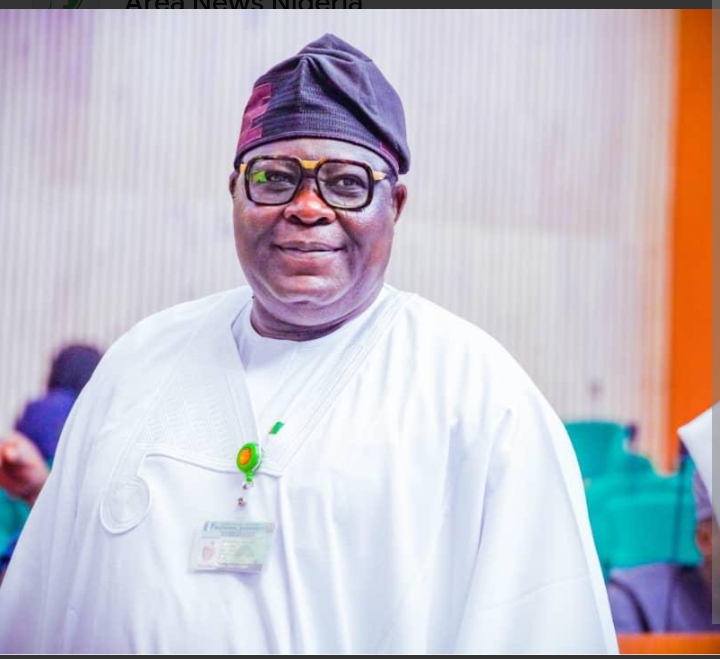
Hon. Chief Thomas Ereyitomi
By: Itse-Elijah Wilkie
Providence raises a man whose silence carries the weight of wisdom, and whose steps leave prints that become paths in different seasons. Hon. Chief Thomas Ereyitomi is one of such rare men. He is a tide that moves without noise, shifting the coastline of his people’s destiny.
He is the calm strength from Ugborodo. He is deep, deliberate, and dependable. Born of Ugborodo waters and moulded by its struggles, he has become not just a politician, but a philosopher by service.
When he entered the hallowed chambers of the House of Representatives in 2019, he carried not ambition, but assignment. He came not as one seeking applause, but as one sent to amplify echoes long drowned by neglect. Noiseless achiever with enviable results.
As a member representing Warri Federal Constituency, Ereyitomi has stood as a bridge between the creeks and the capital, speaking for the oil-bearing but under-served, for the riverine but often forgotten. He has been the custodian of voices from the creeks.
Through him, the House of Representatives heard motions that revived attention toward the economic arteries of the Delta: His motion for the immediate dredging of the Escravos Bar and reopening of Warri, Koko, and Sapele Ports are not mere paper work but geared it was an economic resurrection call. It was his way of saying, “Let the rivers of the Niger Delta flow again.”
He called for Federal Government intervention on the collapsing Warri–Benin and Warri–Sapele highways, roads that serve as lifelines for commerce and oil logistics. He advocated rehabilitation of abandoned jetties and shoreline protection in riverine communities affected by erosion and oil exploration.
He has consistently moved for greater inclusion of Niger Delta youths in the oil and gas sector, insisting that the hands that hold the crude must not live in lack. In plenary, he pushed for urgent reforms in maritime operations, championing the utilization of Warri Port as a strategic export hub to decongest Lagos ports.
In every motion he moved, there was not just debate, there was depth. Not just politics, but purpose. Ereyitomi’s leadership flows beyond the green chamber. He understands that legislation without livelihood is like a river without water. In Warri, and Ugborodo, his touch is tangible. Under his tenure, empowerment became a culture, not a campaign season.
He facilitated training for hundreds of youths through SMEDAN, enabling artisans, welders, tailors, and barbers to build sustainable trades. He distributed tools, industrial sewing machines, hair dryers, generators, welding kits, clippers, and tricycles, not as gifts, but as investments in dignity.
For the riverine dwellers, he donated speedboats for safer travel, and solar-powered street lights for communities long darkened by neglect. He believes development must touch both land and water, for both are the limbs of the Delta’s destiny.
His interventions in education and healthcare are quiet but steady, sponsoring scholarships, renovating classrooms, and supporting community health centers. He is a builder, not just of projects, but of possibilities.
Some men wield power like a storm; others, like a stream. Ereyitomi’s leadership is that of the stream, silent, sure, unstoppable. Behind every motion, there is meditation; behind every policy, there is philosophy. To him service is the loudest campaign.
As Chairman, House Committee on Petroleum Resources (Training Fund), he redefined the conversation around capacity building in the oil and gas sector. Under his watch, the Committee pursued transparency and training inclusivity, ensuring that funds meant to empower Nigerians truly reached Nigerian youths.
He has also served on committees shaping Aviation Technology, Maritime Affairs, and Local Content Development, each role bearing his signature philosophy: Empower the local, and the global will find strength.
He is a thinker who leads, and a leader who listens. His calmness is not a weakness, it is wisdom distilled through years of service. Before the title “Honourable,” he bore another: Chairman of the Ugborodo Community Trust. It was there he first proved that leadership is not about position, but about presence.
He brought transparency to the management of community resources, ensuring accountability and peace. He rebuilt trust where distrust had long divided, fostering unity among the Itsekiri and neighbouring groups.
His philanthropy predates his politics. He has supported widows, sponsored students, and funded community projects across the creeks. He gives to churches, donates to mosques, and sows into interfaith harmony.
During Ramadan, though a Christian, he supported 15 mosques across Warri, an act that spoke louder than sermons, showing that leadership must embrace humanity before identity. He gives quietly, but his impact resounds loudly. For the heart that gives without publicity, receives without measure.
When he stood for election, it was not machinery that moved, it was memory. The fishermen remembered his help. The market women remembered his visits. The youths remembered his empowerment. The elders remembered his respect.
He did not buy loyalty; he earned it. He did not impose himself; he impressed himself upon the conscience of his constituency. His victory was not won at the polls; it was written in the people’s hearts long before voting day. And now, as the tides of election rise again, the waves carry the same whisper across Warri and its creeks:
Let the calm river continue to flow.
He will win again. This is not because of propaganda, but because of proof. Not because he shouts loudest, but because he serves longest. Not because he seeks power, but because he keeps promises.
Hon. Chief Thomas Ereyitomi is more than a legislator. He is a legacy in motion. He is the mangrove root that holds the Delta firm, even as the tides change. He is the current that connects the people’s pain to national policy. He is the bridge between the old and the new, between tradition and transformation. Governance, to him, is not a contract, but a covenant. Not a deal, but a duty.